

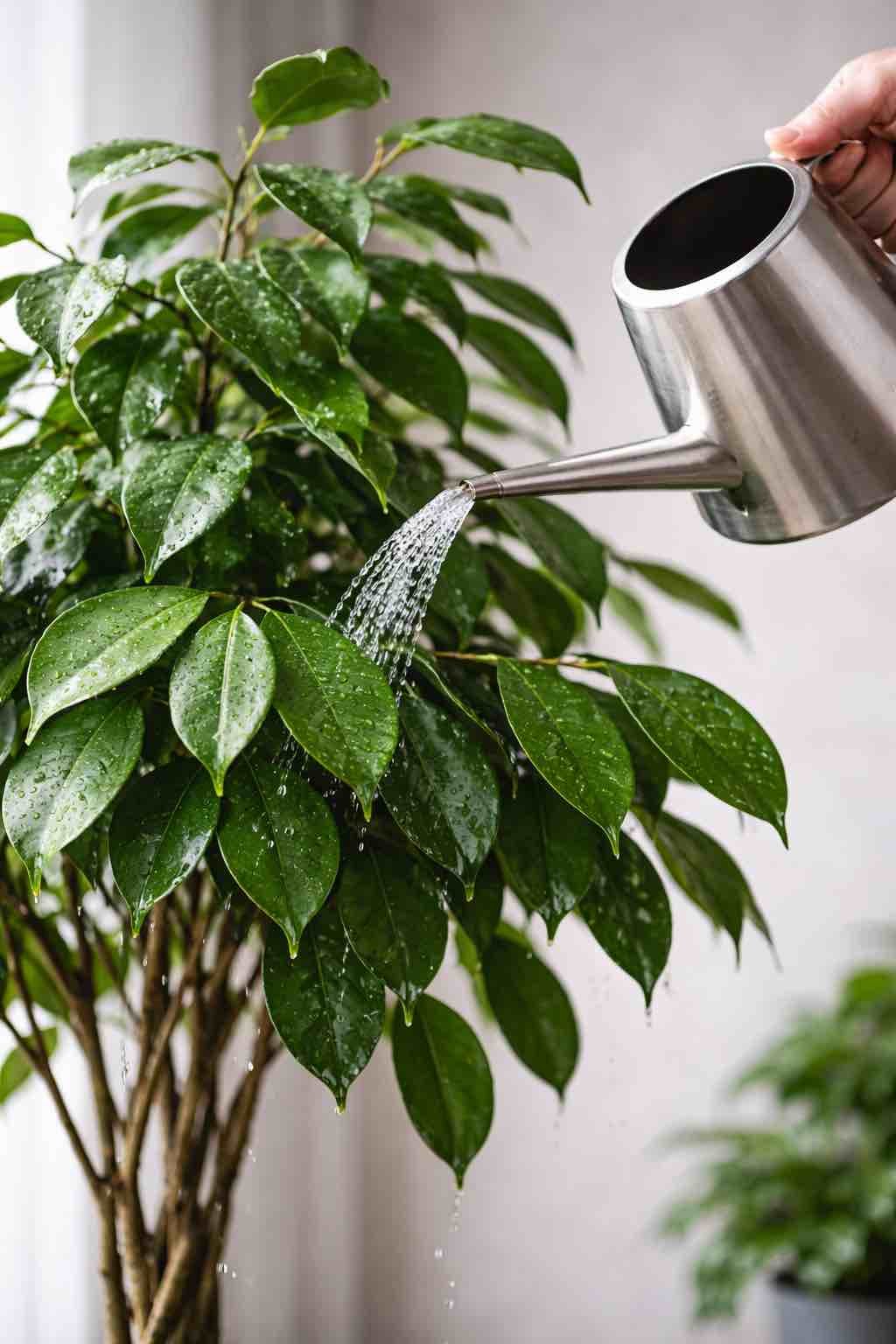
I Didn’t Expect Indoor Plants to Improve My Mental State — But They Did
I didn’t buy indoor plants for therapy.
I bought them because they looked clean and structured. Minimal. Architectural. Something about a well-placed plant in a room makes the space feel intentional.
What I didn’t expect was how much taking care of them would improve my mental focus.
Over time, caring for indoor plants quietly became one of the most stabilizing habits in my routine. And if you’re serious about discipline, productivity, and mental clarity, this might be something worth considering.
The Mental Health Benefits of Indoor Plants (From My Experience)
When people talk about the mental health benefits of indoor plants, they usually focus on relaxation or aesthetics.
For me, it was different.
It was about structure.
Every morning or evening, I:
- Check the soil moisture
- Rotate the plant toward light
- Trim yellow leaves
- Wipe dust from the surface
Five minutes. That’s it.
But that small ritual creates something powerful: controlled engagement with a living system.
No notifications.
No market volatility.
No social media.
Just you and something that responds slowly and predictably to care.
That shift alone lowers mental noise.
Plants Force You to Slow Down (In a Good Way)
Modern life is constant input:
- Charts moving
- Emails stacking
- Deadlines approaching
- Screens everywhere
Plants operate on biological time.
You cannot rush growth.
You cannot force a leaf to unfurl faster.
That pace recalibrates you.
I noticed that after tending to my plants, my thinking becomes less reactive. Less impulsive. More measured.
It’s subtle. But consistent.
And consistency is everything.
There’s a Discipline Component Most People Ignore
Taking care of indoor plants is simple. But not effortless.
Overwater once? You’ll see it.
Neglect light exposure? Leaves will droop.
There’s immediate feedback.
That feedback loop sharpens awareness.
It’s similar to:
- Training legs consistently to manage blood sugar
- Tracking espresso extraction down to grams
- Following one trading setup instead of chasing noise
You don’t need intensity.
You need precision.
Plants reward precision.
The Science Behind It (Briefly)
Research in environmental psychology suggests that green environments reduce cortisol levels and improve attention restoration.
There’s also something called Attention Restoration Theory — natural elements help reset cognitive fatigue.
You don’t need a forest.
A few well-maintained houseplants inside your home can provide micro-restoration moments throughout the day.
For men who operate at high mental bandwidth, that matters.
The Best Beginner Indoor Plants for Mental Clarity
If you’re new, don’t complicate it.
1. Money Tree (Pachira aquatica)
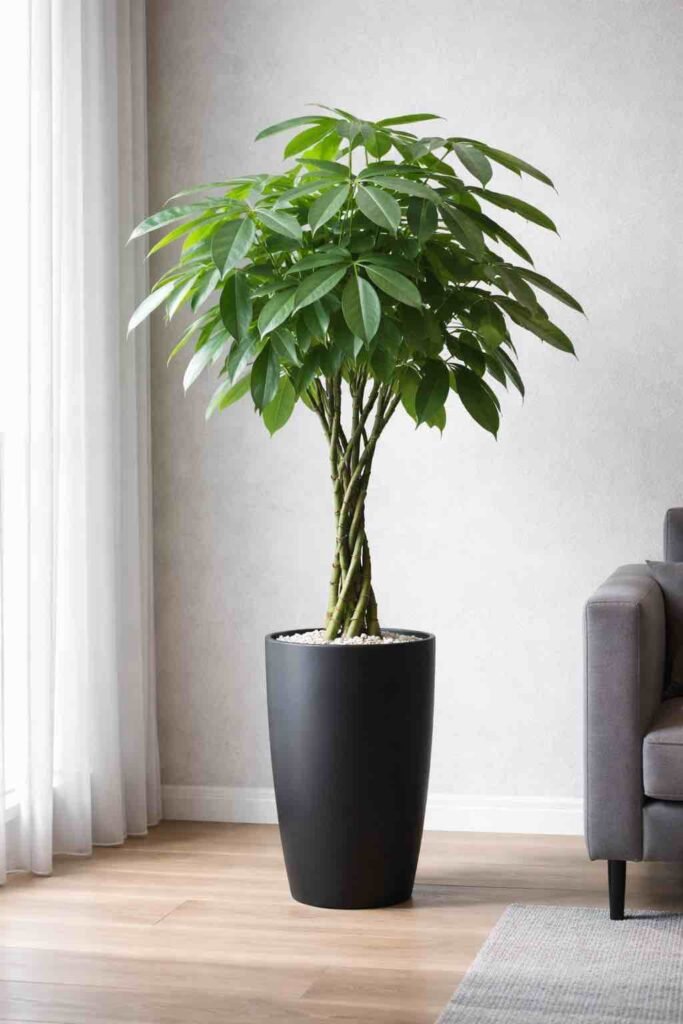
- Braided trunk gives it architectural presence
- Medium maintenance — requires awareness
- Symbolically associated with prosperity
- Thrives in bright, indirect light
The Money Tree (Pachira aquatica) forces attentiveness.
Unlike Snake or ZZ plants, this one won’t tolerate neglect as easily. Overwatering shows quickly. Low light slows growth. You have to observe.
That observation sharpens discipline.
There’s also something psychologically grounding about tending a plant traditionally associated with growth and prosperity. Not in a mystical sense — in a symbolic one.
You’re nurturing something that visually represents upward momentum.
Leaves expand.
Trunk thickens.
Structure strengthens.
It becomes a quiet reminder: growth compounds.
2. Monstera (Monstera deliciosa)
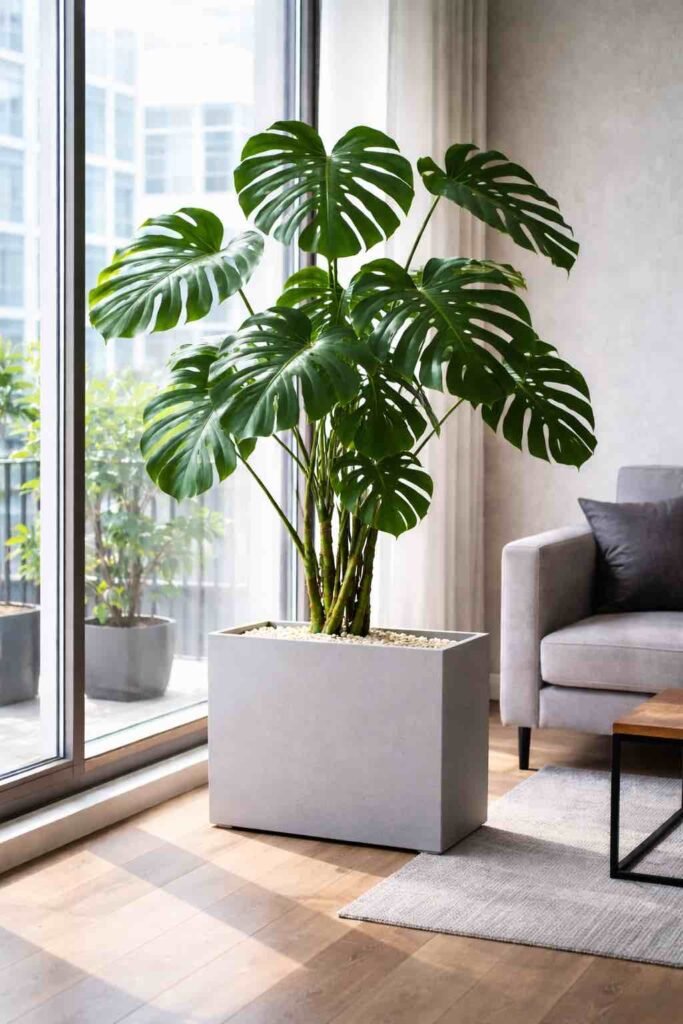
- Large, dramatic split leaves
- Fast grower in proper light
- Visually transforms a space
- Requires consistent but manageable care
The Monstera (Monstera deliciosa) is not subtle.
This plant makes a statement.
When it’s healthy, it looks powerful — broad leaves, clean splits (fenestrations), strong stems. It commands visual attention without being loud.
That alone changes the energy of a room.
3. Fiddle Leaf Fig (Ficus lyrata)
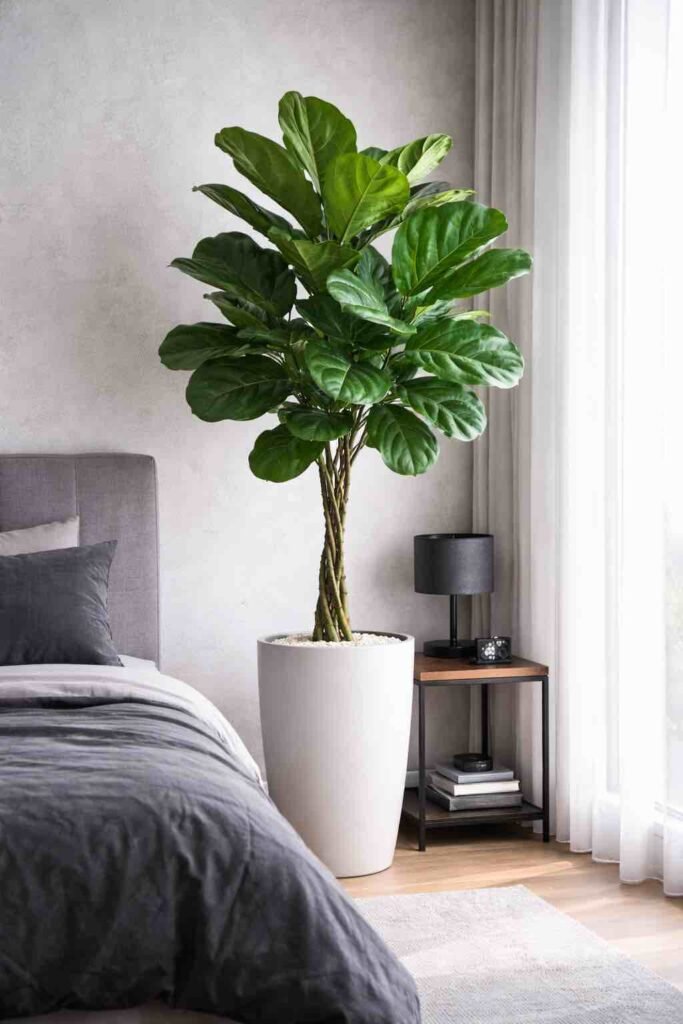
- Large violin-shaped leaves
- Visually bold and architectural
- Sensitive to environmental changes
- Demands consistency
The Fiddle Leaf Fig (Ficus lyrata) has presence.
Tall. Structured. Clean vertical growth.
But here’s the truth — this plant is not forgiving.
And that’s exactly why it’s mentally powerful.
Why the Fiddle Leaf Fig Builds Discipline
This plant reacts to:
- Overwatering
- Underwatering
- Drafts
- Light changes
- Relocation
You move it too often? It drops leaves.
Water it emotionally instead of logically? It shows stress fast.
It forces you to slow down and observe patterns.
That observation strengthens executive control — the same mental muscle required for:
- Controlled training intensity
- Following one trading setup
- Maintaining consistent skincare
- Avoiding impulsive decisions
You don’t guess with a Fiddle Leaf Fig.
You measure.
The Mental Benefit Isn’t Relaxation — It’s Awareness
When you maintain a Fiddle Leaf Fig properly, you develop:
- Environmental sensitivity
- Patience under delayed results
- Pattern recognition
- Response calibration
That’s cognitive sharpening.
You start noticing subtle signals — leaf droop angle, soil dryness, light direction.
That heightened awareness carries into other areas of life.
You become less reactive.
More deliberate.
Aesthetic Impact: Command Presence
A healthy Fiddle Leaf Fig changes a room.
It adds vertical authority.
Minimal decor + one tall Ficus = controlled strength.
There’s a reason it dominates modern interiors. It balances clean masculine environments without clutter.
And visual order directly affects mental order.
4. Weeping Fig (Ficus benjamina)
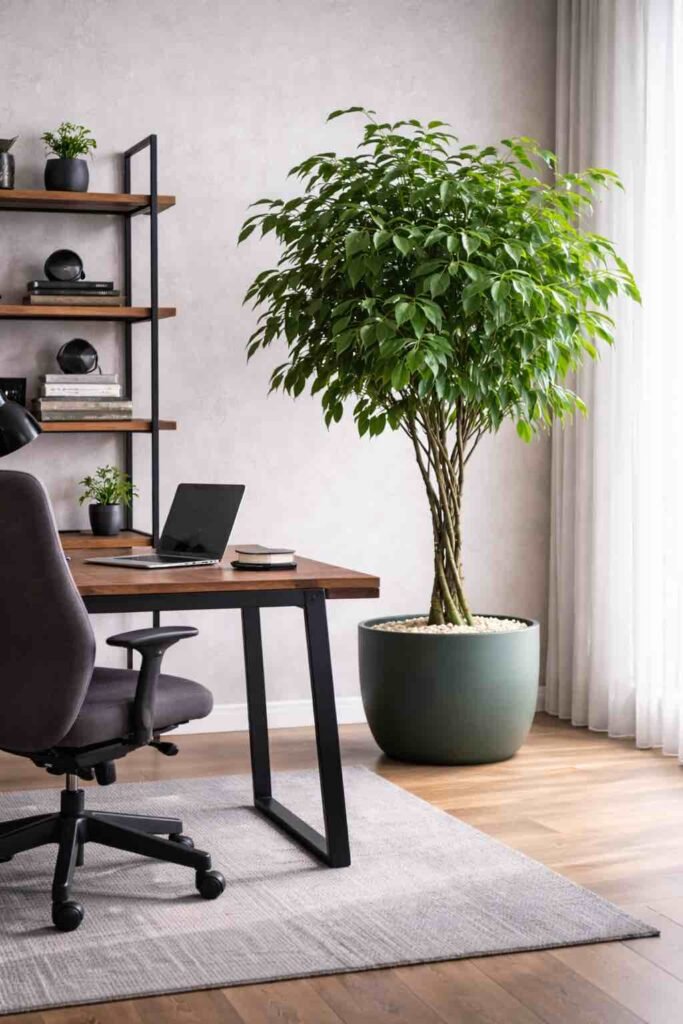
- Elegant, tree-like structure
- Dense canopy with small glossy leaves
- Long lifespan with proper care
- Sensitive to environmental change
The Weeping Fig (Ficus benjamina) is traditional.
Before Instagram plants. Before trendy Monsteras. This was the indoor tree in serious homes and offices.
There’s something grounded about that.
Why Ficus Benjamina Builds Mental Stability
This plant doesn’t like disruption.
Move it suddenly? It drops leaves.
Change light exposure? It reacts.
Inconsistent watering? You’ll see thinning foliage.
It teaches one thing very clearly:
Stability matters.
You can’t shock this plant into performance.
You must provide steady conditions.
That steady input → steady output dynamic mirrors disciplined living.
Same light.
Same watering schedule.
Same placement.
Consistency compounds.
Psychological Impact: Long-Term Thinking
A healthy Ficus benjamina grows slowly but steadily into a true indoor tree.
Not dramatic like Monstera.
Not high-maintenance like Fiddle Leaf Fig.
It’s long-horizon growth.
You don’t get instant visual payoff.
You get gradual thickening of structure.
That reinforces patience.
And patience is a competitive advantage in:
- Investing
- Training
- Skill development
- Health maintenance
Short-term noise fades. Structure remains.
Aesthetic Role: Controlled Maturity
The silhouette is refined.
Dense foliage. Vertical structure. Clean lines.
It feels established.
If your space includes:
- neutral tones
- gym equipment tucked cleanly
- minimal furniture
- controlled lighting
A Ficus adds maturity without distraction.
Visual order influences mental order.
This plant anchors a room.
What It Actually Changed for Me
After months of consistent plant care, I noticed:
- Less mental agitation
- More patience in decision-making
- Better transition between tasks
- A stronger sense of environmental control
It didn’t transform my life.
It stabilized it.
And stability compounds.
Is This a Replacement for Therapy or Medical Care?
No.
Let’s be clear.
Indoor plants are not a cure for anxiety, depression, or serious mental health conditions.
But they are a practical, low-cost habit that improves mental hygiene.
And mental hygiene is just as important as physical hygiene.
You brush your teeth daily.
You train your body weekly.
Why not maintain your environment intentionally?
My Thoughts
Taking care of indoor plants isn’t about becoming a “plant guy.”
It’s about practicing controlled responsibility over something living.
In a world that moves too fast, plant care forces strategic slowing down.
And sometimes, slowing down is exactly how you sharpen your edge.
Disclaimer:
This article reflects personal experience and is intended for informational purposes only. Indoor plant care is not a substitute for professional medical or psychological treatment. If you are experiencing symptoms of depression, anxiety, or other mental health conditions, consult a licensed healthcare provider.